Loading for more accurate data retrieval
NEW PRODUCT
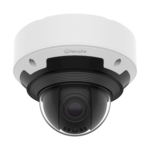
4MP AI Outdoor Vandal Dome Camera
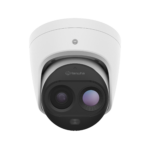
Early Fire Detection Bi-spectrum Thermal Camera
Quick links
Suggested links
Technical Support Portal
Contact Sales
Contact CS
Toolbox plus
You can download Hanwha Vision's data.
2026.01.02
City life is a vibrant blend of commerce, tourism, entertainment, congestion, crime, rapid growth, and evolving demographics.
To ensure the safety of individuals and property, traditional security and surveillance technologies should be replaced by intelligent transportation systems (ITS), which do much more than merely monitor traffic as cities adopt smart infrastructure.
The rise of artificial intelligence (AI) and advanced data analytics has transformed surveillance camera technology into a strategic business solution. By integrating traditional surveillance with AI insights, we can improve transportation systems, traffic management, situational awareness, resource allocation, and emergency responses.
Smart cities leverage connected devices to enhance efficiency in traffic, energy, and public safety.
Today, the global smart city market size is estimated to be nearly $900 billion. And, according to Grandiew Research, it is projected to exceed $3.7 trillion by 2030, with compound annual growth rates (CAGR) estimated at 29.4%.
Intelligent Transportation Systems (ITS) are vital for upgrading transportation infrastructure, enabling smart city managers to analyze data for resource allocation, safeguard systems against security threats, and create safer environments for transit.
ITS involves utilizing cameras as sensors, where the video captured becomes secondary to the rich metadata extracted. This data forms the foundation for developing predictive models and solutions that ultimately enhance urban living and even promote sustainability.
Along with intelligent, AI-enabled video surveillance solutions, other key smart city technology investments should include robust fiber connectivity and constructing open, modular, and scalable cloud infrastructure to support the testing of innovative technologies.
The potential applications and use cases for smart cities and ITS environments are extensive and diverse, encompassing:
The phrase “doing more with less” is a perfect description for how city planning and security teams are leveraging today’s advanced video surveillance devices to generate key benefits that extend well beyond traditional security monitoring.
Surveillance solutions increasingly incorporate onboard analytics for low-latency real-time alerts and data that drive intelligent business decisions, exemplified by multi-sensor camera technology.
With one device connected through a single data link, it’s possible to monitor and record multiple key areas, each with unique fields of view, such as parks and other public spaces, intersections, roads, sidewalks, and shared pathways.
Equipped with built-in analytics, cameras can facilitate truly intelligent transportation and surveillance functions. A significant focus area in ITS is “active mitigation,” which involves identifying issues before they escalate into major problems through regular monitoring and preventive actions.
For example, city officials may want to track pedestrian street-crossing patterns, detect double parking, jaywalking, near misses, and collisions, or manage work zones. They might seek to know the number of people crossing the street near city hall or a light rail facility.
Since cameras are already directed at that train station, they can capture that data while also gathering footage beneficial for law enforcement to investigate physical altercations, robberies, or violent crimes. Multi-sensor technology makes dual-function performance easier.
Utilizing this dual-approach model is also efficient. The metadata stream is approximately 5 percent the size of a video stream while complying with privacy regulations under the EU’s General Data Protection Regulation (GDPR).
The final piece of technology hinges on network connectivity and data access. To avoid latency, a fiber connectivity of at least 5G is optimal. One agency may have less fiber and more point-to-point connectivity compared to another agency equipped with robust fiber infrastructure and a network uptime of 99.9 percent.
Implementing ITS and smart city technologies requires alignment among different city agencies and departments, as well as overcoming challenges such as legacy infrastructure, budget constraints, and cultural resistance to change.
Analytics have reached a tipping point where they can potentially replace existing sensors.
However, if a traffic agency faces challenges in using utility poles to hang or power a camera, realizing these solutions becomes difficult and costly.
A collaborative mindset across departments is crucial to maximize taxpayer spending and return on investment.
Ultimately, the goal of smart cities and ITS is to create a more interconnected, efficient, and sustainable urban environment. These technologies enable cities to manage resources more effectively, enhance quality of life, and foster economic growth.
The long-term outlook for ITS and smart city development will continue to depend on a holistic approach that combines surveillance technology, accessible funding, and a forward-thinking mindset. When executed properly, the results can signify a pivotal advancement in urban management and infrastructure, leading to a safer, more secure, and efficient world.
PNM-C16013RVQ
PNM-C32083RVQ
PNM-C34404RQPZ
XNV-A9084R
XNO-A9084R
PNV-A9082RZ
PNM-C19183RVTP
Previous
Hanwha Vision to Showcase Future-Ready AI Solutions at Intersec 2026
Next
The Standard of Quality
It may take a while for the document to be ready for download.
Hanwha Vision is the leader in global video surveillance with the world's best optical design / manufacturing technology and image processing technology focusing on video surveillance business for 30 years since 1990.
해당 사이트는 쿠키를 사용하며, 이는 귀하에게 유용한 정보를 파악 하고, 최적화된 정보를 제공하는 마케팅에 활용될 수 있습니다. 이 사이트를 계속 사용함으로써 쿠키 활용에 동의하게 됩니다.