Loading for more accurate data retrieval
NEW PRODUCT
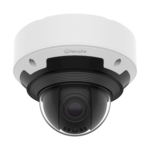
4MP AI Outdoor Vandal Dome Camera
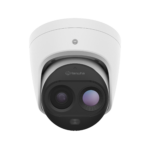
Early Fire Detection Bi-spectrum Thermal Camera
Quick links
Suggested links
Technical Support Portal
Contact Sales
Contact CS
Toolbox plus
You can download Hanwha Vision's data.
2026.01.19
In healthcare settings, deploying video surveillance solutions necessitates a careful balance between security requirements and patient privacy rights.
It is crucial to strictly comply with regulations such as HIPAA, GDPR, and others; otherwise, organizations may face substantial fines and other negative consequences.
Cameras should be installed in public and semi-public areas where there is no reasonable expectation of privacy. These areas include:
Typically, surveillance cameras are not allowed in all areas.
Commonly off-limits areas include doctor consultation rooms, hospital bathrooms, and employee break rooms and locker rooms. In these areas, employees and visitors have a reasonable expectation of privacy.
Surveillance cameras are not universally allowed in patient rooms either. Rules governing this vary significantly by region due to different laws, privacy expectations, and hospital policies.
In regions that allow cameras in patient rooms, they are typically used for specific safety or medical reasons, such as high-risk or elderly patients, behavioral health units, or maternity wards, that require nursing staff and doctors to have remote monitoring capabilities.
Previous
Hanwha Vision Introduces 2nd Generation X Series Plus camera Enhanced for Operational Efficiency and Seamless Upgrades
Next
Why You Can Trust Our AI
It may take a while for the document to be ready for download.
Hanwha Vision is the leader in global video surveillance with the world's best optical design / manufacturing technology and image processing technology focusing on video surveillance business for 30 years since 1990.
해당 사이트는 쿠키를 사용하며, 이는 귀하에게 유용한 정보를 파악 하고, 최적화된 정보를 제공하는 마케팅에 활용될 수 있습니다. 이 사이트를 계속 사용함으로써 쿠키 활용에 동의하게 됩니다.