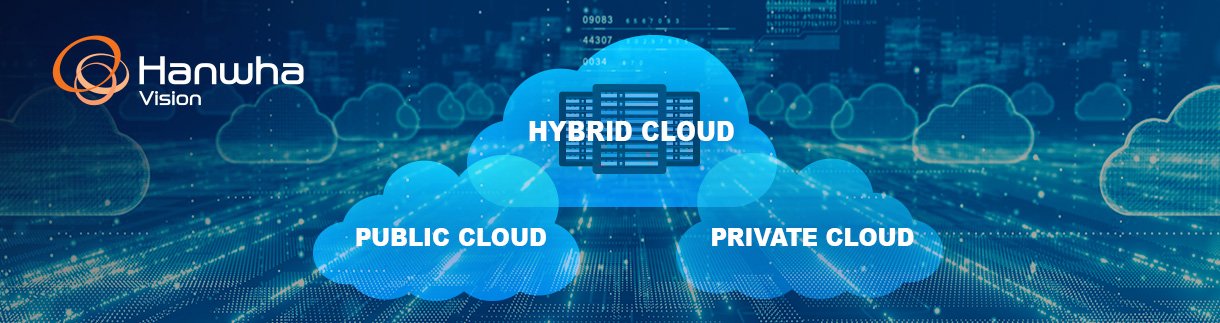
Cloud computing continues to evolve as businesses increasingly rely on digital infrastructure to manage operations, protect assets, and secure sensitive data. One of the most significant developments in recent years is hybrid cloud computing. It offers a flexible, secure, and scalable approach to managing data and applications. This is especially important for businesses investing in advanced surveillance and security systems.
What Is a Hybrid Cloud?
A hybrid cloud combines elements of both public and private cloud infrastructure, allowing data and applications to move between the two environments. The key characteristic of a hybrid cloud is the orchestration of these disparate resources as a single, unified infrastructure.
This setup allows businesses to benefit from the scalability and cost savings of public cloud services while keeping greater control and security over sensitive or mission-critical workloads through private cloud or on-premises servers.
How It Differs From Other Cloud Models
The hybrid cloud model stands in contrast to other cloud deployment types:
Public cloud: Resources are owned and operated by a third-party provider and shared across multiple tenants. This offers high scalability and cost-efficiency but might raise concerns about data security and control for some organizations.
Private cloud: Infrastructure is dedicated to a single organization, either hosted on-premises or by a third-party provider. It provides enhanced control and security but may reduce flexibility and increase costs compared with public clouds.
Multi-cloud: The use of multiple public cloud services from different providers. While it offers redundancy and avoids vendor lock-in, it doesn't necessarily involve integration with on-premises infrastructure, which is the defining feature of a hybrid cloud.
What makes hybrid cloud computing unique is the integration of more than one cloud model into a single infrastructure. Because public cloud, private cloud, and multi-cloud models can all be incorporated, there is a lot of variation in how hybrid models can work.
Types of Hybrid Cloud Computing
Variations within hybrid cloud deployments can arise based on the specific mix of on-premises and public cloud resources, the degree of integration between them, and the workloads being run in each environment. For instance, a business might choose to keep sensitive data on a private cloud while leveraging the scalability and cost-effectiveness of a public cloud for less critical applications or data storage.
Benefits of Hybrid Cloud Technology
Hybrid cloud technology offers several advantages when compared to more traditional or single-environment cloud strategies:
Enhanced flexibility: Allocate resources between private and public environments based on real-time needs.
Improved security: Keep sensitive video data and user credentials on private infrastructure while offloading less sensitive tasks.
Scalability on demand: Expand cloud capacity quickly during high-demand periods without major infrastructure investment.
Cost efficiency: Optimize cost by running routine tasks in the public cloud while reserving high-security workloads for the private cloud.
Support for legacy systems: Easily integrate with existing on-premises surveillance systems and infrastructure.
Business continuity: Strengthen disaster recovery and backup capabilities through geographic cloud redundancy.
These benefits apply to businesses of any size, but in particular, mid-size and enterprise-scale organizations typically stand to benefit the most from hybrid cloud deployments.
Drawbacks of Hybrid Cloud Technology
Despite its advantages, hybrid cloud adoption also presents a few potential drawbacks:
Complexity: Requires advanced planning and information technology (IT) expertise to manage multiple environments.
Integration challenges: Ensuring seamless communication between private and public components can be difficult.
Security management overhead: Requires careful policy management across cloud boundaries.
Higher initial costs: Infrastructure and integration setup can be more expensive than pure cloud or on-premises solutions.
Compliance risks: If poorly implemented, hybrid models may introduce risks in regulated industries.
Hybrid cloud computing isn't the best choice for every type of business or application, but for certain uses, the benefits of hybrid stand out among alternatives. For example, security and surveillance are areas where hybrid deployments can be especially effective.
Applications of Hybrid Cloud Technology for Businesses
Hybrid cloud technology supports a wide range of business functions by combining the control of private infrastructure with the scalability of public cloud services. This makes it an ideal choice for organizations needing flexibility, data resilience, and secure access across diverse operations. Potential applications of hybrid technology include:
Data storage and backup: Store frequently accessed data on-premises for fast performance while archiving historical or compliance-related data in the cloud to reduce local storage demands.
Business continuity and disaster recovery: Enable rapid failover and data recovery by layering critical systems across cloud and local environments, minimizing downtime from outages or cyberattacks.
Security and surveillance systems: Support real-time video capture and monitoring on-site while leveraging the cloud for long-term video storage, remote access, and artificial intelligence (AI)-powered analytics such as motion detection.
Remote premises management: Centrally monitor and control security devices, sensors, and infrastructure across multiple locations using cloud-based dashboards, while retaining on-site control when applicable.
Compliance and data governance: Segment workloads based on data sensitivity, using private infrastructure to handle regulated or proprietary information while utilizing the public cloud for general business operations.
While the core benefits of hybrid cloud – flexibility, scalability, and control – apply to all businesses, the specific applications and advantages vary depending on size.
Hybrid Cloud for Different Business Sizes
For smaller businesses with limited IT resources, a hybrid approach might involve keeping core security systems on-premises for direct control while leveraging the public cloud for cost-effective off-site backup and cloud-based analytics services. The benefits of scalability might be less immediate, but cost savings on storage and the ease of using managed public cloud services can be attractive. That said, drawbacks like complexity might be more significant for small businesses due to a lack of dedicated IT staff.
Mid-sized businesses benefit from the hybrid cloud's ability to handle more complex environments and higher data volumes, plus the advantage of scalability to support business growth. Enterprise hybrid cloud models make it possible to efficiently segment workloads, keeping sensitive data in private environments while shifting high-volume tasks like video archiving or analytics to the cloud. The enterprise hybrid model also supports centralized control of distributed systems, such as remote premises monitoring and data collection, while maintaining localized failover capacity for critical functions.
Hybrid Cloud in Different Industries
The versatility of hybrid cloud computing makes it useful across a range of sectors:
Retail: Monitor in-store behavior and inventory in real time while storing long-term video data in the cloud.
Manufacturing: Integrate cloud analytics with on-site surveillance to monitor worker safety and production line anomalies.
Healthcare: Store video from patient monitoring systems privately, while leveraging cloud storage for non-identifiable training data.
Education: Manage campus security with a combination of on-premise camera feeds and cloud-based threat alerts.
Government: Maintain strict compliance with data handling regulations while enabling cross-agency access to cloud-stored video archives.
In highly regulated industries like government and healthcare, hybrid cloud offers the security and compliance flexibility needed to meet both internal policy and external regulatory requirements.
Alternatives to Hybrid Cloud Models
While hybrid cloud models offer a powerful and versatile approach, alternative cloud deployment models might be more appropriate in certain situations:
Public cloud only: For organizations with less stringent security or compliance requirements and a need for maximum scalability and cost-effectiveness, full migration to the public cloud might be the best option. This simplifies management and allows for complete access to the provider's range of services.
Private cloud only: Organizations with extremely high security and compliance demands, or those with existing significant investments in on-premises infrastructure that still meet their needs, might opt for a purely private cloud environment. This offers maximum control but can be less flexible and more expensive in the long run.
Traditional on-premises infrastructure: In some cases, particularly for very small businesses with simple security needs or those with highly specialized legacy systems, maintaining a traditional on-premises infrastructure might still be viable. However, this often comes with limitations in scalability, redundancy, and access to advanced cloud services.
Ultimately, the decision of whether to adopt a hybrid cloud strategy or an alternative depends on a business's specific needs, security requirements, compliance obligations, budget constraints, and long-term technological goals. For many organizations seeking a balance between control, flexibility, scalability, and cost-effectiveness for their security and surveillance technology, the hybrid cloud represents a compelling and increasingly relevant solution.
Previous
Next