
 As artificial intelligence reshapes everything from job sites to news feeds, a surprising picture is emerging of how Americans feel about it.
A new national survey of 1,000 U.S. adults reveals that Americans see value in AI's potential, especially for improving safety, efficiency, and convenience. However, they have serious reservations about how humans use it.
In short, people trust technology more than they trust those controlling it. They want AI that makes life safer and more reliable, not tools that can be misused by governments, companies, or bad actors.
Key Findings
- 33% of Americans said they are somewhat comfortable with AI-powered security, while 31% said they are somewhat uncomfortable.
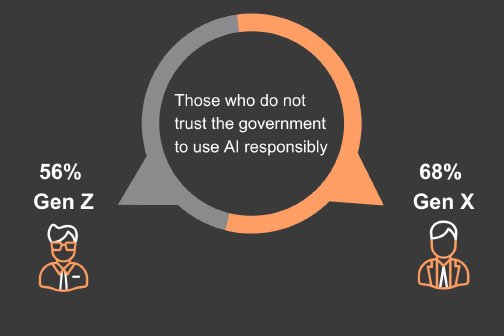
- 68% of Gen Xers said they do not trust the government to use AI responsibly, compared to 56% of Gen Zers.
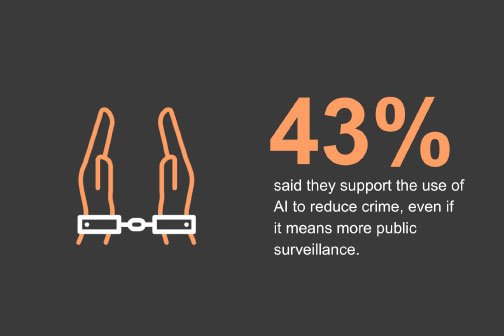
- 43% of respondents said they support the use of AI to reduce crime, even if it means more public surveillance.
- 69% of Americans believe AI will eliminate more jobs than it creates in the long run.
- Only about 30% said they are very worried about their own job being replaced.
- 52% of Americans said they are very concerned about AI-generated misinformation.
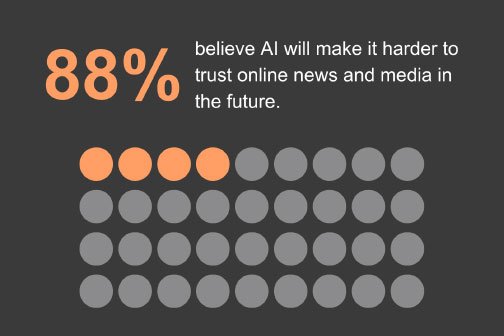
- 88% believe AI will make it harder to trust online news and media in the future.
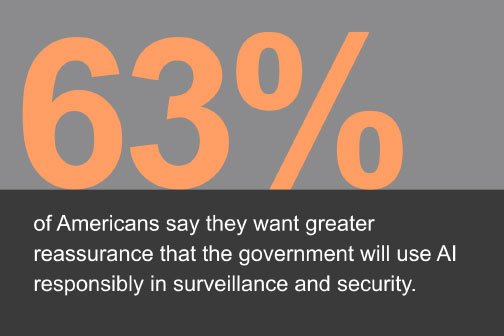
- 63% of Americans say they want greater reassurance that the government will use AI responsibly in surveillance and security.
Americans Are Split on AI Security, But Not on Responsibility
 When it comes to surveillance, Americans aren't rejecting AI itself. They're worried about how responsibly it's deployed.
- 33% of Americans said they are somewhat comfortable with AI-powered security, while 31% said they are somewhat uncomfortable.
- 68% of Gen Xers said they do not trust the government to use AI responsibly, compared to 56% of Gen Zers.
This near 50/50 split reveals a nation trying to balance the benefits of safety with the risks of overreach. It's not technology that divides opinion. It's the trustworthiness of the institutions using it.
AI is already being used to improve safety in airports, public spaces, and local communities. When implemented transparently and with oversight, AI-driven surveillance can reduce risks while respecting privacy.
Public comfort with AI depends on responsible implementation, transparency, and oversight. Americans are signaling that they're ready for smarter, safer communities as long as the humans in charge are held accountable.
Americans Want AI That Keeps Them Safe and People Accountable
 Many Americans support the use of AI in security when it delivers tangible public benefits. Purpose and boundaries are the primary concern, not surveillance.
- 43% of respondents said they support the use of AI to reduce crime, even if it means more public surveillance.
This conditional trust is crucial. Americans are pragmatic: they'll accept AI if it's used ethically, produces visible safety improvements, and includes checks on potential abuse. The message is clear: accountability must advance at the same pace as innovation.
Americans Don't Fear AI Taking Their Jobs, They Fear Who's in Charge of It
 Despite constant headlines about automation anxiety, most Americans aren't panicking about losing their jobs to AI. They're more concerned about how leaders will handle AI's growing role in the economy.
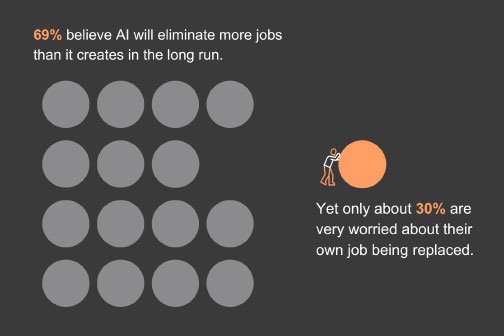
- 69% of Americans believe AI will eliminate more jobs than it creates in the long run.
- Yet only about 30% said they are very worried about their own job being replaced.
This shows that Americans don't see AI as the enemy; they see mismanagement as the risk. People believe automation will change work, but they also believe that humans control whether that change helps or harms the workforce.
Americans Want AI to Defend Truth, Not Distort It
 Misinformation remains one of the most pressing public concerns, and people see AI as both part of the problem and part of the solution.
- 52% of Americans said they are very concerned about AI-generated misinformation.
- 88% believe AI will make it harder to trust online news and media in the future.
Americans want AI tools that protect truth, not pollute it. This means technology that can spot deepfakes, verify authenticity, and reduce the spread of false information. Trust in digital spaces will depend on AI's ability to correct human misuse, not amplify it.
Americans Distrust Institutions, Not Innovation
 Across issues of privacy, safety, and truth, Americans are far more skeptical of human decision-making than they are of the technology itself.
- 63% of Americans say they want greater reassurance that the government will use AI responsibly in surveillance and security.
This distrust isn't anti-innovation. It's a demand for responsibility. People believe AI can make society safer, more efficient, and more secure, but only if leaders use it with ethics, transparency, and public oversight.
The Future of AI Depends on Human Integrity
Across every question, the pattern is consistent: Americans are cautiously optimistic about AI but skeptical of human behavior.
They see potential in the technology – to prevent crime, strengthen safety, and improve truth online – but they want reassurance that it will be handled wisely. The message is clear: AI itself isn't the issue. Accountability is.
As innovation accelerates, the companies and institutions that prioritize ethics and transparency will lead the way. Building trust in AI isn't just about smarter machines; it's about better humans behind them.
Summary
Based on a national survey of 1,000 Americans, a more nuanced portrait of the nation's relationship with artificial intelligence has emerged. Rather than fearing the technology itself, Americans are primarily concerned about how people and institutions will use it.
The findings reveal a public that sees both promise and peril: 63% want stronger assurances that the government will use AI responsibly, even as nearly half say they support AI when it improves public safety. And while 69% believe AI could eliminate more jobs than it creates, most don't fear for their own, reflecting confidence in human adaptability.
At the same time, 88% of Americans worry AI will make it harder to trust information online, underscoring a growing desire for accountability and safeguards against misuse.
Ultimately, the data suggests Americans aren't rejecting AI, but they're demanding responsible leadership. For most, AI represents not a threat to the future but a test of human integrity in shaping it.
Methodology
This study was conducted through a nationally representative survey of 1,000 U.S. adults via Pollfish. Responses were analyzed across demographic categories, including age, gender, and region. The data was weighted to reflect the U.S. adult population accurately.
Fair Use
Users are welcome to utilize the insights and findings from this study for noncommercial purposes, such as academic research, educational presentations, and personal reference. When referencing or citing this article, please ensure proper attribution to maintain the integrity of the research. Direct linking to this article is permissible, and access to the original source of information is encouraged.
For commercial use or publication purposes, including but not limited to media outlets, websites, and promotional materials, please contact the authors for permission and licensing details. We appreciate your respect for intellectual property rights and adherence to ethical citation practices. Thank you for your interest in our research.