Spring-Ford Area School District
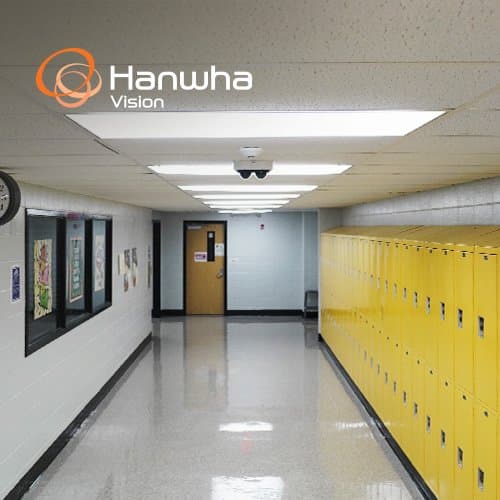
What is drawer-1? Spring-Ford Area School District Takes a Smarter Approach to Protecting Students and Staff District Enhances Student Safety and Accelerates Investigations with Hanwha Vision Surveillance "We want to know what's happening on our campuses at any time so we can respond as quickly as possible." For Jason Corropolese, Spring Ford High School Public Safety Officer, and the security team at Spring-Ford Area School District (SFASD), achieving that goal is easier said than done, with 13 schools plus a district office to monitor and protect. The district covers a sprawling geographic area, located in Limerick/Royersford, Pennsylvania, about five hours from Pittsburgh and roughly 45 minutes outside Philadelphia. Having 24/7 “eyes on” visibility is nearly impossible without the right surveillance technology. SFASD needed to fill in the gaps in its campus-wide visibility coverage, helping their teams conduct more effective investigations across multiple buildings. “Tracking a student's movements through multiple buildings typically meant reviewing footage from dozens of cameras. AI gives us the opportunity to locate people much faster. That's where we see a lot of potential moving forward.” - Jason Corropolese, Spring Ford High School Public Safety Officer To address those gaps, Spring-Ford upgraded its surveillance system with Hanwha Vision multi-sensor and PTZ cameras. The district was particularly interested in AI-based search tools that could reduce the time spent reviewing video footage during investigations and speed up response times. Like many K-12 districts, Spring-Ford deals with a range of security and operational responsibilities. On any given day, the security team may be investigating a student altercation, assisting with an HR matter, responding to an insurance claim, or gathering information related to a Title IX inquiry. Truancy is common, especially at the high school level, and discipline issues are always present, including fights, students cutting class, and students being “missing” and unaccounted for in bathrooms, hallways, or potentially off campus. "Discipline is probably our biggest challenge," said Corropolese. “Sometimes we're trying to determine where someone went or what happened before staff arrived. Having clear visibility makes a tremendous difference." The district’s existing coverage gaps weren’t solely the result of inadequate camera technology. Privacy requirements and teachers’ union policies restrict cameras in educational classrooms, limiting visibility in the places where disciplinary issues commonly occur. SFASD replaced its legacy analog system with Hanwha Vision IP cameras, expanding its camera total from about 200 to approximately 1,500 cameras, a mix of multi-sensor, multi-directional and PTZ cameras. The entire system is operated on the Genetec video management system. "The boost in image quality alone has been a huge improvement," said Corropolese. "We're able to capture details that simply weren't possible with the older systems." Cameras are positioned throughout hallways, stairwells, entrances, and outdoor areas, giving the team total visibility into each building, except for classrooms. Open spaces like parking structures and athletic facilities lots are fully covered using multi-sensor cameras and PTZ zooms, including five-way cameras that show multiple views from a single device. Two-way cameras cover long hallways, providing crisper views and reducing blind spots by covering each direction with a dedicated view. The district also invested in a centralized command center equipped with 13 dedicated 55-inch displays showing custom views of each building. Four additional interactive monitors are used for continuous live monitoring and rapid response across the district. Now, security personnel can monitor activity across the district from a single location. Supporting a Long-Term Safety Strategy Corropolese views video surveillance as just one piece of the district's overall long-term safety strategy. “Prevention through visible cameras is a goal, but simply adding more cameras does not always deter misbehavior,” he said. The district manages its own K–12 police department with seven police officers, including Corropolese, a chief, and a lieutenant. Maintaining an internal, armed police force is relatively rare, and it’s given other schools an effective model to follow. Most SFASD officers are retired state and local police, adding invaluable levels of law enforcement experience compared to relying solely on hired security guards. Local police operate independently but rely on the district for camera footage when after-hours incidents occur on campus. Looking ahead The district follows a five-year technology refresh plan, working with Genetec and its installer ISS to upgrade at least one building per year covering cameras, infrastructure, and management systems. SFASD plans to use its new AI capabilities more extensively to speed investigations, such as entering a shirt color to track a student through a building, which is much faster than manually reviewing footage from each camera. “Tracking a student's movements through multiple buildings typically meant reviewing footage from dozens of cameras," said Corropolese. “AI gives us the opportunity to locate people much faster. That's where we see a lot of potential moving forward." Corropolese said the system's value becomes most apparent during the moments when staff need answers quickly. "Our goal is to create the safest environment possible," he said. "The better information we have, the faster we can respond, investigate, and ultimately support our schools."
Education
|2026-10-16