
Government buildings face a distinct set of security challenges that go beyond the concerns of private industries. While both sectors are vulnerable to theft, vandalism, and data breaches, government facilities are also high-value targets for acts of terrorism, espionage, and politically motivated attacks. Because these spaces often house sensitive information, critical infrastructure, and public officials, their security demands a more rigorous, multi-layered approach.
Unlike a typical office or corporate space, government facilities must enforce stricter access policies, adhere to national compliance standards, and integrate both physical and digital defense measures. As security risks evolve, so do the strategies necessary to protect personnel, information, and physical assets.
Here are the foundational elements of building security that every agency should consider.
Access Control

Controlling who enters and exits a government building is fundamental to preventing internal and external threats. Access control systems provide a frontline defense by limiting physical entry to authorized individuals only.
Government facilities often rely on strategically placed gates, locked entryways, and turnstiles equipped with keycard scanners or biometric verification systems. These systems are particularly critical in sensitive areas, such as data centers, military installations, and administrative hubs. Effective access control ensures that even if someone gains entry past the front door, they cannot freely move through the building without proper clearance.This type of control helps maintain accountability. Electronic access logs can track movement in and out of secure zones, enabling agencies to audit who was present at a given time during an incident.
Surveillance
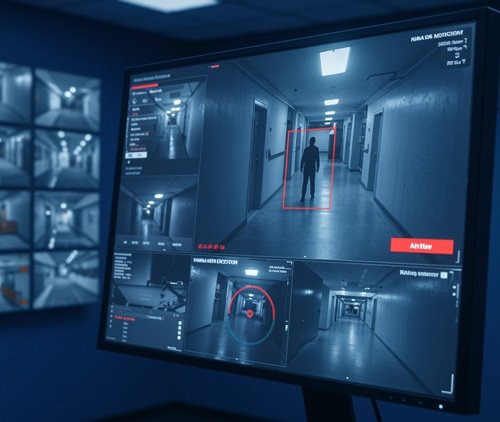
Video surveillance is an essential tool for enhancing safety across government properties. Properly placed security cameras act as both a deterrent and an active monitoring solution. They help identify intruders, capture suspicious behavior, and provide vital footage during investigations.Modern surveillance systems utilize artificial intelligence (AI)-driven software that can perform tasks beyond simply recording video. These AI technologies detect unusual activity, recognize license plates, analyze movement patterns, and even flag unattended objects. This enables security teams to respond more quickly and make more informed decisions, which reduces the risk of human error or delayed responses.For high-traffic areas such as courthouses or federal offices, AI-enhanced surveillance provides the precision that traditional systems often lack. It's proactive, not just reactive.
Remote Monitoring
Security doesn't stop when the building closes for the day. Remote video monitoring provides continuous protection by enabling off-site security personnel to monitor live feeds, receive alerts, and respond to incidents in real time. With cloud-based platforms, agencies can streamline surveillance management without sacrificing control or visibility.
Remote monitoring offers flexibility. For example, if suspicious behavior is detected outside normal hours, alerts can trigger immediate action by dispatching local police, notifying in-house teams, or locking down specific areas of the facility. In this way, remote monitoring creates a responsive, connected network where human oversight is supported by smart technology.
Alarm Systems
Alarms are an indispensable component of a complete security system. When strategically integrated with surveillance and access control tools, alarms serve as an early warning mechanism that can prevent incidents before they escalate.
Government buildings typically install alarms in restricted areas or around sensitive storage spaces. These systems may activate when detecting motion, pressure changes, or forced entries. Security personnel are notified instantly, and automated protocols, such as locking nearby doors or alerting first responders, can be triggered.
Alarms are especially helpful in layered security environments, where every second counts in detecting unauthorized access.
Best Practices for Securing Government Buildings
Maintaining a secure government building means following a consistent, strategic approach that aligns with national standards and anticipates emerging threats.
Here are the best practices that enhance both operational effectiveness and regulatory compliance:
Monitor Regulatory Compliance
Government security systems are subject to strict regulatory requirements. From procurement policies to data handling, agencies must ensure their tools and vendors meet federal standards.Equipment that complies with the National Defense Authorization Act (NDAA) ensures that agencies stay on the right side of policy while protecting mission-critical infrastructure. Using NDAA-compliant equipment is also one of the most effective ways to maintain security integrity. These systems are vetted for use in sensitive environments, helping agencies avoid national security risks and potential legal complications.
Address Cybersecurity Threats
Physical threats are only half the battle. Government agencies are prime targets for digital attacks like ransomware, phishing schemes, and data breaches. Hackers often exploit gaps in security software, outdated systems, or human error to gain unauthorized access to confidential information.
Raising cybersecurity awareness across departments is an invaluable part of defense. Training staff to recognize malicious links, maintain secure passwords, and handle sensitive data responsibly helps reduce the risk of successful attacks. Regular system audits and software updates are also needed to keep defenses sharp.
Cyber and physical security must work together. A compromised digital system can easily give someone access to physical infrastructure, or vice versa.
Conduct Risk Assessments
Routine security risk assessments provide a snapshot of how well a facility is protected. These evaluations identify vulnerabilities, ranging from blind spots in surveillance coverage to weak points in network defenses.
For example, an assessment might reveal that an emergency exit lacks a functioning alarm or that visitor access logs aren't consistently reviewed. On the digital side, it might uncover unsecured network ports, outdated firewalls, or overlooked user access permissions. Fixing these issues before they lead to a security breach can save time, resources, and reputations.
Conducting quality, comprehensive assessments is just as important as regular ones. Physical and cyber security should never operate in silos. A vulnerability in one often exposes the other. For instance, if an intruder gains physical access to an unsecured server room, they could bypass digital defenses with a simple flash drive. Likewise, if a phishing scam compromises building access credentials, a badge reader at the door becomes useless.
Agencies should conduct these assessments regularly, especially in response to significant changes such as staff turnover, building renovations, or system updates. An ongoing, critical review of your facility's physical and digital defenses ensures nothing falls through the cracks.
Prioritize Continuous Improvement
Security technology evolves quickly, and so do the tactics of those looking to bypass it. Continuous training keeps personnel updated on best practices, new tools, and emergency response protocols.
Training programs might include simulations, classroom instruction, or online learning. Topics can range from handling hostile visitors to operating AI-powered security platforms. Agencies that invest in their teams create a stronger, more adaptive frontline defense.
Security staff who feel confident in their skills are more likely to respond effectively in the event of an incident.
Previous
Next