Loading for more accurate data retrieval
NEW PRODUCT
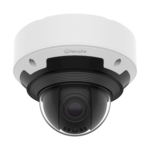
4MP AI Outdoor Vandal Dome Camera
Early Fire Detection Bi-spectrum Thermal Camera
Quick links
Suggested links
よくあるご質問
お問い合わせ
Toolbox plus
製品に関する資料はこちらからダウンロードしてお使い下さい。
2026.03.12
The National Retail Federation’s 2025 survey shows theft rising at an alarming pace. Retailers that track incidents reported a 26% jump in shoplifting and merchandise theft from 2022 to 2023, followed by another significant increase heading into 2024.
The upward trend continued as respondents documented double-digit growth in both shoplifting and merchandise theft over the past year, signaling a sustained and intensifying challenge as retailers prepare for 2026.
Stores that once handled isolated incidents now encounter more frequent theft attempts that disrupt daily operations, strain staff, and reduce already tight margins. Rising crime patterns also influence how shoppers perceive safety inside the store, which shapes customer experience across entire regions.
To make informed security decisions for the year ahead, retailers need clear visibility into current trends. Read on to learn why theft is on the rise, how shoplifting tactics have evolved and what you can do to protect your store.
Several key factors, from economic conditions to store layouts, are influencing when and how retail theft occurs. Identifying these drivers is essential to guiding smarter investments in security strategies and technologies.
Rising consumer prices are shifting theft patterns, making everyday essentials like personal care products and over-the-counter medications more common targets. As inflation continues, items that were once low-risk now carry higher theft potential.
This trend forces retailers to rethink loss prevention strategies, especially for products that move quickly and carry narrow margins.
In many regions, law enforcement agencies are redirecting attention from nonviolent shoplifting or other low-level theft offenses to address more urgent public safety concerns. (Risk Management Magazine) As a result, shoplifting often receives slower response times or lower priority.
This reduced enforcement presence can embolden repeat offenders, who may view the risk of consequences as minimal. For retailers, this shift makes in-store prevention and incident documentation even more critical.
More than 20.1 million Americans have stolen from a self-checkout kiosk, and 8.85 million say they plan to do it again, highlighting how common theft has become in these areas. (Capital One Shopping)
Self-checkout offers more anonymity and less direct oversight, and the layout of these stations often gives individuals space to mis-scan, skip scans or conceal items without drawing attention. As more retailers expand self-checkout availability, incidents tied to these lanes continue to rise.
Organized retail crime is the coordinated theft of large quantities of merchandise by groups that plan their activity in advance. These groups study store layouts, staffing patterns and security gaps to carry out high-volume theft that can unfold in minutes.
Because each incident involves multiple participants and high-value goods, ORC contributes significantly to overall shoplifting losses and places added strain on store operations.
Although external shoplifting accounts for a large share of retail shrink, employee theft still represents 28.5% of losses and in some cases approaches one-third of total shrink. (Extenda Retail)
Employee theft often takes place through repeated actions that blend into everyday operations, such as skipped scans, unauthorized discounts, or concealed merchandise removal. That makes this type of theft harder to detect and more damaging when left unaddressed.
Shoplifting trends vary widely by region. State-level patterns help retailers understand risk and adjust coverage, staffing, and security technology for each market.
Addressing retail theft this holiday season requires a multilayered approach that blends operational training with modern technology. These methods help stores respond earlier and document incidents with higher accuracy.
AI-driven video systems help retailers spot suspicious behavior more quickly, enabling faster intervention and stronger loss prevention than manual monitoring alone. Advanced analytics can detect unscanned items, flag concealment attempts, and recognize irregular movement near high-risk shelves.
Many of these AI-powered security cameras also support facial recognition, making it easier to track individuals who return to the store or move in patterns that suggest repeat shoplifting. By connecting insights across multiple cameras, retailers gain better visibility into suspicious activity and stronger evidence to support investigations.
Access control systems limit movement into stockrooms, fulfillment areas, and back-of-house spaces by requiring employees to scan a badge, enter a PIN, or use other credentials to gain entry.
When tied to surveillance solutions, these systems create a verified record of who enters sensitive locations and when unusual attempts occur. This helps retailers separate routine activity from behavior that indicates unauthorized access or potential product removal.
Access control becomes especially useful for addressing employee theft and for narrowing investigative focus, since it provides clear audit trails that document internal movement.
With 63% of retailers increasing manager training on handling threats and 60% expanding employee training on workplace violence prevention, staff readiness is becoming a key component of loss prevention strategies. (National Retail Federation)
Employees who understand theft indicators can act sooner and respond safely, without putting themselves or their colleagues at risk. Simple interactions, such as greeting customers, offering assistance, or checking in near frequently targeted categories, can discourage shoplifters and reduce opportunities for concealment.
Well-trained staff also know to maintain a more attentive presence in high-risk parts of the store where many incidents originate, such as self-checkout stations. They’ll also document events more clearly after the fact, so stores are better equipped to support investigations.
Consistent communication with local agencies helps retailers strengthen their response to recurring theft patterns. Shared video evidence, time-stamped sequences, and behavior summaries allow investigators to connect incidents across multiple locations.
Many regions also offer crime-prevention assessments that identify vulnerabilities related to lighting, layout or perimeter coverage. These partnerships reinforce store efforts and support broader community initiatives focused on reducing retail theft.
Every unmonitored aisle in your retail environment creates an opportunity for theft. In a landscape where shoplifting is growing more organized and opportunistic, retailers need tools that do more than record what happened after the fact.
Hanwha Vision’s AI-powered video analytics help retailers detect suspicious behavior in real time, so they can take action quickly and confidently. They also integrate with access control to verify who enters stockrooms or restricted areas, creating a unified record of movement that supports both internal and external theft prevention.
Beyond basic video recording, Hanwha Vision connects related events across multiple cameras, highlights patterns that indicate repeat offenders, and accelerates forensic search through advanced metadata tagging.
Whether you manage a single store or a multi-location operation, Hanwha Vision gives you the visibility and control needed to reduce loss and protect your bottom line.
前へ
Choosing the Best Retail Security Cameras for Your Store
次の記事
LPR Camera Systems for Road AI, ITS, and Smart City Surveillance
It may take a while for the document to be ready for download.
Hanwha Vision is the leader in global video surveillance with the world's best optical design / manufacturing technology and image processing technology focusing on video surveillance business for 30 years since 1990.
We use cookies on our website to give you the most relevant experience by remembering your preferences and repeat visits. By clicking “Accept”, you consent to the use of ALL the cookies.