
Mandi King
North America Sports & Leisure Business Development Manager Hanwha Vision America
Have recent highprofile security instances like the New Year’s attack in New Orleans and the HealthNet CEO murder (and presidential assassination attempts) changed the perception of security and surveillance in the venue and entertainment space? How, or how not?
Mandi King: Venues that are interested in bidding to host major events, like a World Cup, are more likely to be awarded the hosting position if the venue has met league best practices in terms of their security systems. As a result, we’re seeing an overall focus on facility surveillance upgrades These efforts increase their potential to generate new revenue, and they also address the security concerns raised by several recent highprofile security incidents, especially in New Orleans and New York City.
We’re seeing increased efforts to secure the exteriors and physical perimeters of venues and even beyond, including surrounding areas, sidewalks, and parking lots. Many venues are adding CCTV coverage and deeper security measures to harden their security monitoring beyond just tracking and detection, adding capabilities like visible weapons detection and crowd management. They want to make patrons feel safer and also be able to provide any type of evidence that the city or law enforcement might need to investigate an incident. Of course, that extra security adds more costs and if budgets are tight, it can be challenging for a venue.
How are new venues incorporating security and surveillance into new and existing venue spaces? How would you describe the priority from venue owners and developers?
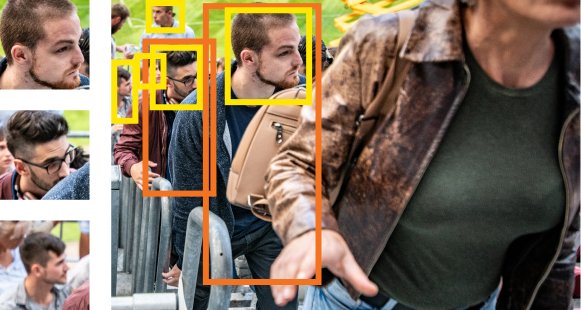
Mandi King: Venues across the board from small to large are placing a greater emphasis on facility security and surveillance. Even venues who weren’t awarded an event are planning upgrades to be prepared for the next rounds of hosting bids. Customers often ask for AI and advanced analytics capabilities in our cameras. In addition to tracking and detection accuracy, AI-powered analytics can turn a surveillance posture from reactive to proactive, generating alerts about potential issues before they escalate.
Are expanded international events like the FIFA World Cup changing the security and surveillance scene? How are Hanwha Vision and other providers meeting the needs of these major events?
Mandi King: World organizations that produce global events are prioritizing enhanced venue security systems, so the requirements and the expectations for venue security have increased exponentially.
There is a growing demand for high-megapixel and multisensor cameras, as well as AI-powered models that venues can integrate with their existing systems to enhance overall capabilities without having to perform a full system overhaul. Products like our 4ch AI multisensor camera powered by the NVIDIA Jetson platform and our AI Box are ideal for those applications, and they are extremely attractive to venues.
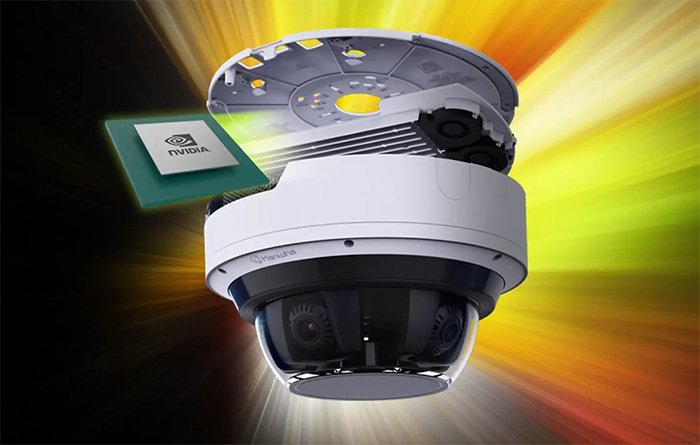
They open a world of possibilities as customers can leverage existing and custom-developed applications for the NVIDIA chipset to seam-lessly enable new analytics and capabilities unavailable on competitive cameras.

With the AI Box, venues now have an easier path to AI implementation. It allows the easy addition of AI functionalities to standard security cameras without built-in AI. Venues can add AI features to existing cameras, even models that necessarily aren’t Hanwha Vision cameras (but are ONVIF compatible) or models that might be beyond their warranty date). It’s a great way to protect your technological investment, stay current and upgrade to new capabilities without having to incur the time and costs of replacing an entire system all at once.
Hanwha Vision also offers ultra high-resolution cameras, the TNB-9000 (32MP) and the TNO-A26081 (26MP). These AI cameras deliver total venue security, covering large areas and capturing the finest details, digitally zooming in on specific sections of an image while still retaining sharpness.
Related Product

TNO-A26081

TNB-9000
Both are high megapixel solutions for long range wide area coverage, including the ability to detect perimeter activity without needing long data and power cable runs.
Hanwha Vision’s multichannel, multidirectional cameras with AI and IR capabilities can help venues get the most out of their tech spend. With just one multidirectional camera using one IP data connection, a facility can cover large areas more efficiently. Plus, there’s an added infrastructure benefit of fewer cable runs needed to provide total coverage.
Integrating the right surveillance technology that matches an individual venue’s requirements and blends with existing venue security measures, is a trend that will continue. Event organizers can significantly reduce the risk of incidents and accelerate their emergency response times, ultimately creating a secure, safe, and welcoming public environment.
Previous
Next