Education
2026-11-05Columbus State University
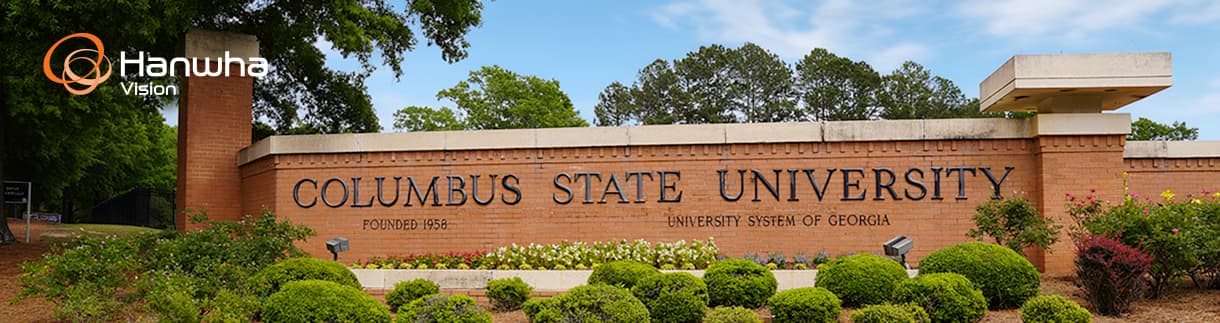
Protecting for Today; Planning for the Future: Columbus State University Upgrades with Hanwha Vision
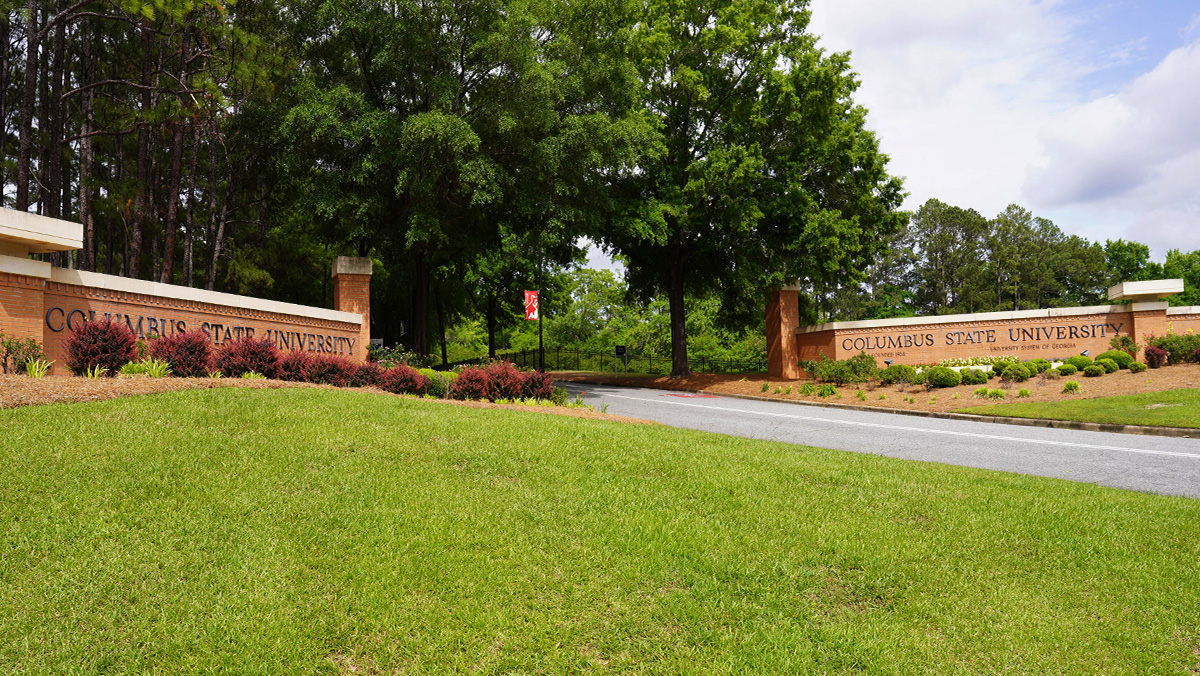
With two main campuses five miles apart in downtown Columbus, GA, plus satellite sites located in neighboring counties, security is always a top priority for the surveillance team at Columbus State University.
“Our job is to provide a safe environment where students can enjoy campus life and receive a quality education without having to worry about their security,” said Sergeant Mike Redmond, Columbus State University Police Department, Criminal Investigation Division.
Achieving that goal was challenged by a growing total university population coupled by a rise in incidents over the past few years, heightening the need for a complete surveillance upgrade.
Columbus State University modernized its campus‑wide security with Hanwha Vision surveillance cameras across its facilities supported by the WAVE video management system (VMS) ecosystem. The University now has a more user‑friendly and scalable surveillance platform that aligns with its goal of staying current and cost‑efficient for the next five to seven years of security planning.
Lt. Douglas Dunlap, Lieutenant of Support Services, recalled his first experiences with the school’s previous system. “Most cameras throughout campus were about 15 to 20 years old and, at any given time, about 100 of them were usually offline,” he said. “The video quality was poor and blocky, not ideal for on-the-fly investigations requiring effective identification. The technology was sufficient for its time, but there were too many technological hurdles.”
System usability was another major constraint. Officers had to click through multiple steps to zoom in on a subject and spend hours reviewing footage to find a specific clip, significantly reducing their response times.
“We only had to look through 20 clips versus hours of video, and we resolved the issue in about 10 minutes, compared to spending hours going through all the recorded video footage.”
- Douglas Dunlap, Lieutenant of Support Services, Columbus State University
Scaling Surveillance with Growth
Total enrollment at Columbus State is 7,500 students, with an average daily population of between 2,500 to 3,000 people; a mix of faculty, students, staff, and visitors. Sports and special events can raise that number to more than 5,000.
The team clearly needed a surveillance system that could handle such a dynamic volume, cover wide areas over a sprawling layout, and deliver consistent performance backed by targeted analytics.
When evaluating replacement options, Dunlap and his team focused on usability, image quality, cost-effectiveness, and scalability. The team wanted a system that officers could operate easily and intuitively in high-pressure situations, paired with high-resolution (4K or higher) cameras capable of capturing evidence-quality footage. Budget considerations were also essential, as funding constraints required prioritizing value without sacrificing performance. That meant any new technology had to easily adapt to future needs, allowing incremental upgrades rather than complete, and costly, system overhauls.
Deploying Hanwha Vision Cameras Across Campus
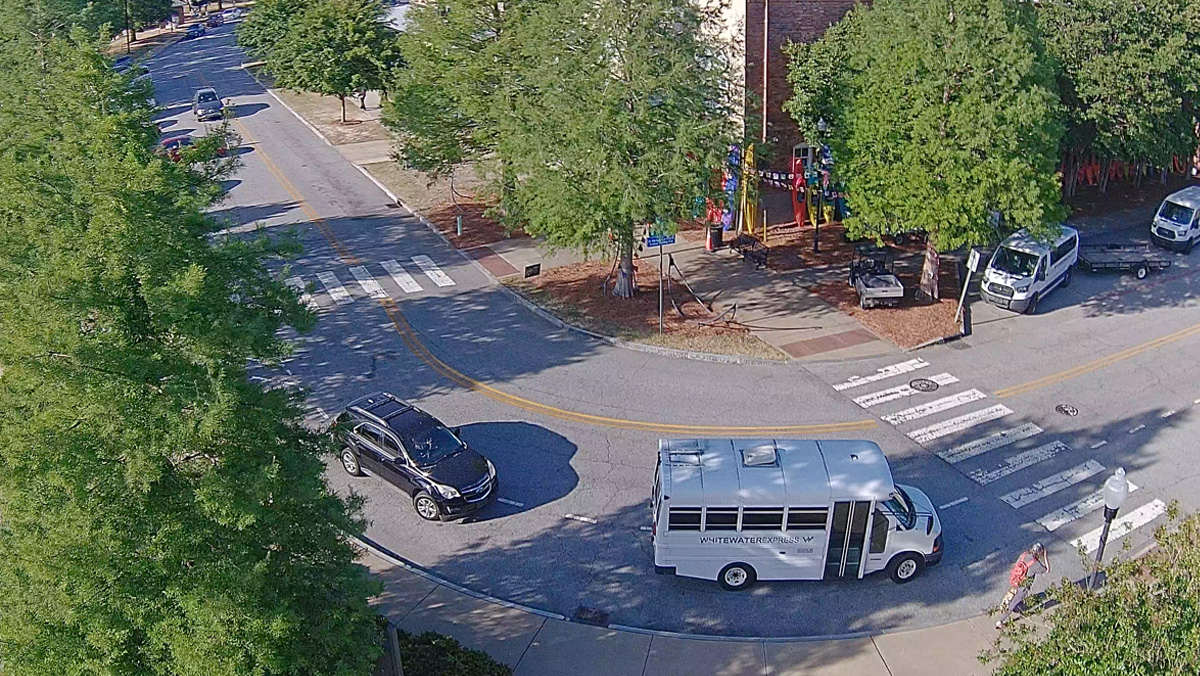
The University selected Hanwha Vision technology, deploying approximately 750 cameras across its campuses and locations generating nearly 800 distinct views. Camera placement was tailored to specific use cases. Standard dome cameras were replaced with high-resolution Q series 4K QNV‑C9084R models at most buildings, while X series cameras were configured in “hotspot” areas such as main entrances for advanced attribute searches.
Multi-sensor and panoramic P series cameras were installed in wide-area environments like equipment yards and open campus zones, providing 180-degree views or multi-directional coverage.
This approach ensured comprehensive coverage while freeing up the team from the more time-intensive aspects of reviewing security footage.
“At first, I thought there was something wrong because of how easy and fluid everything was!” Dunlap said.
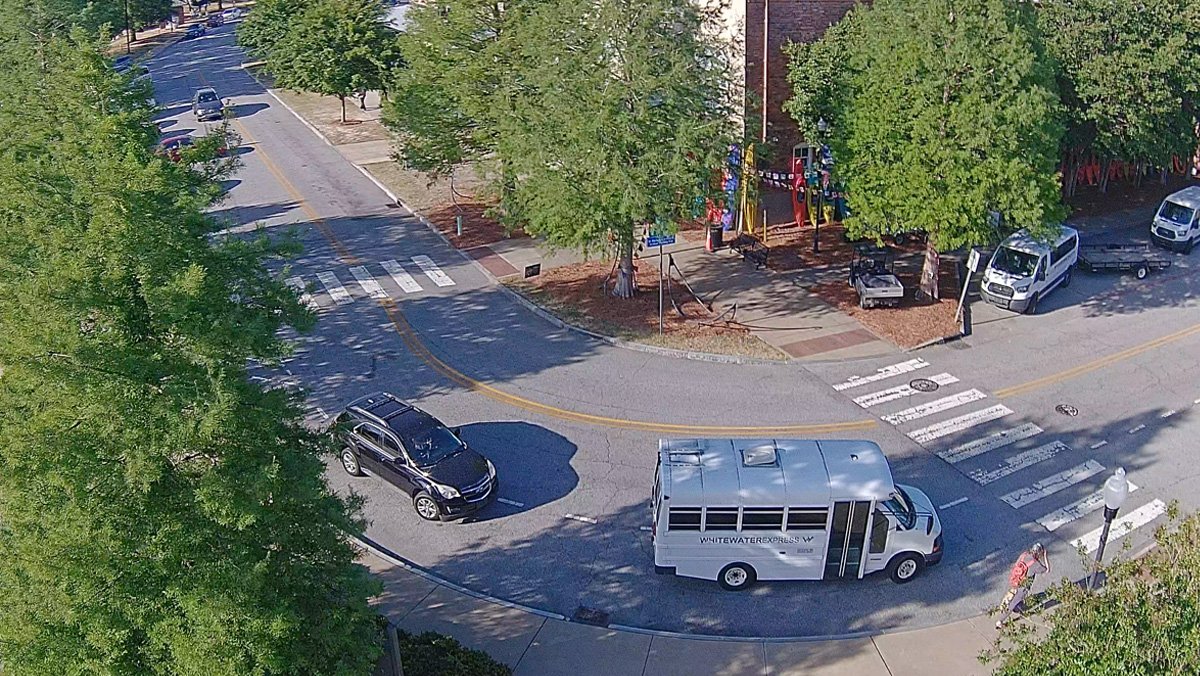
A stand-out advantage of the new system is its built-in AI analytics. The University has implemented features such as virtual line crossing to monitor high-risk areas like bike racks. When a line is crossed during designated hours, officers automatically receive alerts of possible suspicious activity.
The team added license plate recognition technology through the Q series cameras with analytics like Attribute Search and using 4K models with AI‑driven object detection, reducing investigation time and shifting campus policing from reactive to proactive.
The Role of WAVE VMS in Investigations and Operations
Central to the University’s upgrade is the WAVE VMS, which integrates cameras, analytics, and user access into a unified platform. WAVE has transformed investigative workflows by enabling rapid searches using motion and object detection. Officers can access live and recorded footage from patrol vehicles or mobile devices, effectively turning every officer into a remote surveillance operator.
Dunlap and his team also pair WAVE Mobile with specific camera features like Motion Search, which automatically identifies and highlights only the footage containing motion.
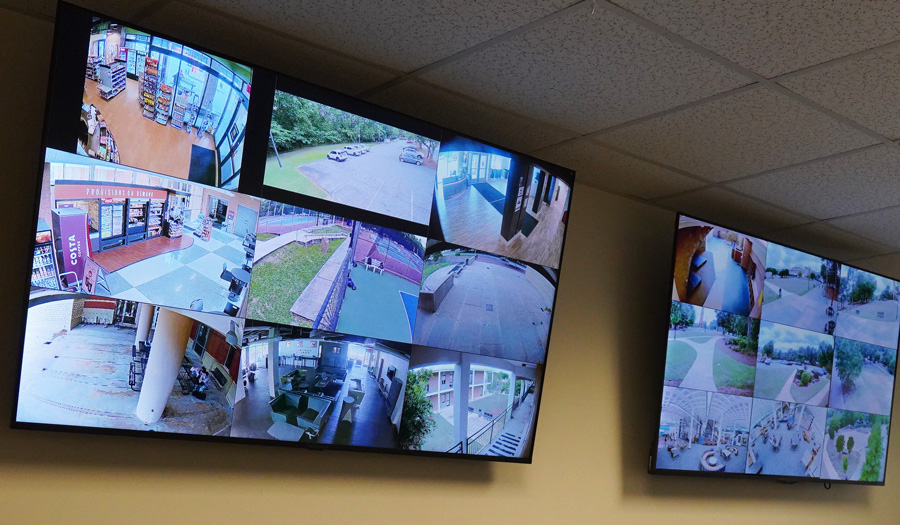
“When we first switched to WAVE,” he said, “we hadn’t yet fully converted to Hanwha Vision and one of the first theft cases we solved involved using a 15-year-old camera. With the WAVE system, we used motion search to pinpoint zoom on the item that was stolen. We only had to look through 20 clips versus hours of video, and we resolved the issue in about 10 minutes, compared to spending hours going through all the recorded video footage.”
WAVE Sync also overcomes prior network limitations by enabling secure remote access. This allows officers, supervisors, and even external partners like local law enforcement to view cameras in real time, streamlining collaboration and eliminating delays associated with manual video sharing.
Dunlap uses the NetPlanner services and Hanwha Vision’s DesignPro + WAVE Mobile app together as a highly complementary system management workflow. NetPlanner often leads projects end‑to‑end, conducting site surveys, collaborating on layouts, designing systems from the ground up to ensure proper installation. At the same time, DesignPro lets users independently build detailed system layouts by importing floor plans, placing cameras, and simulating real-world performance metrics like field of view, coverage, and DORI (detect, observe, recognize, identify) calculations.
DesignPro acts as a central planning tool, enabling accurate visualization and system validation before deployment. Users can test different camera models, mounting heights, and angles to optimize placement, while automatically generating a “shopping list” of required devices, infrastructure, and power/network capacity.
A Safer, Smarter Campus Environment

By combining modern technology with thoughtful deployment and continuous upgrades, Columbus State is delivering on its promise to protect students, faculty, staff, and visitors by creating a safer and more responsive campus environment.
“Our roadmap for campus security is always changing,” said Dunlap. “We always want to have the best technology in place to create a safer campus."
At a Glance
Previous